Introduction
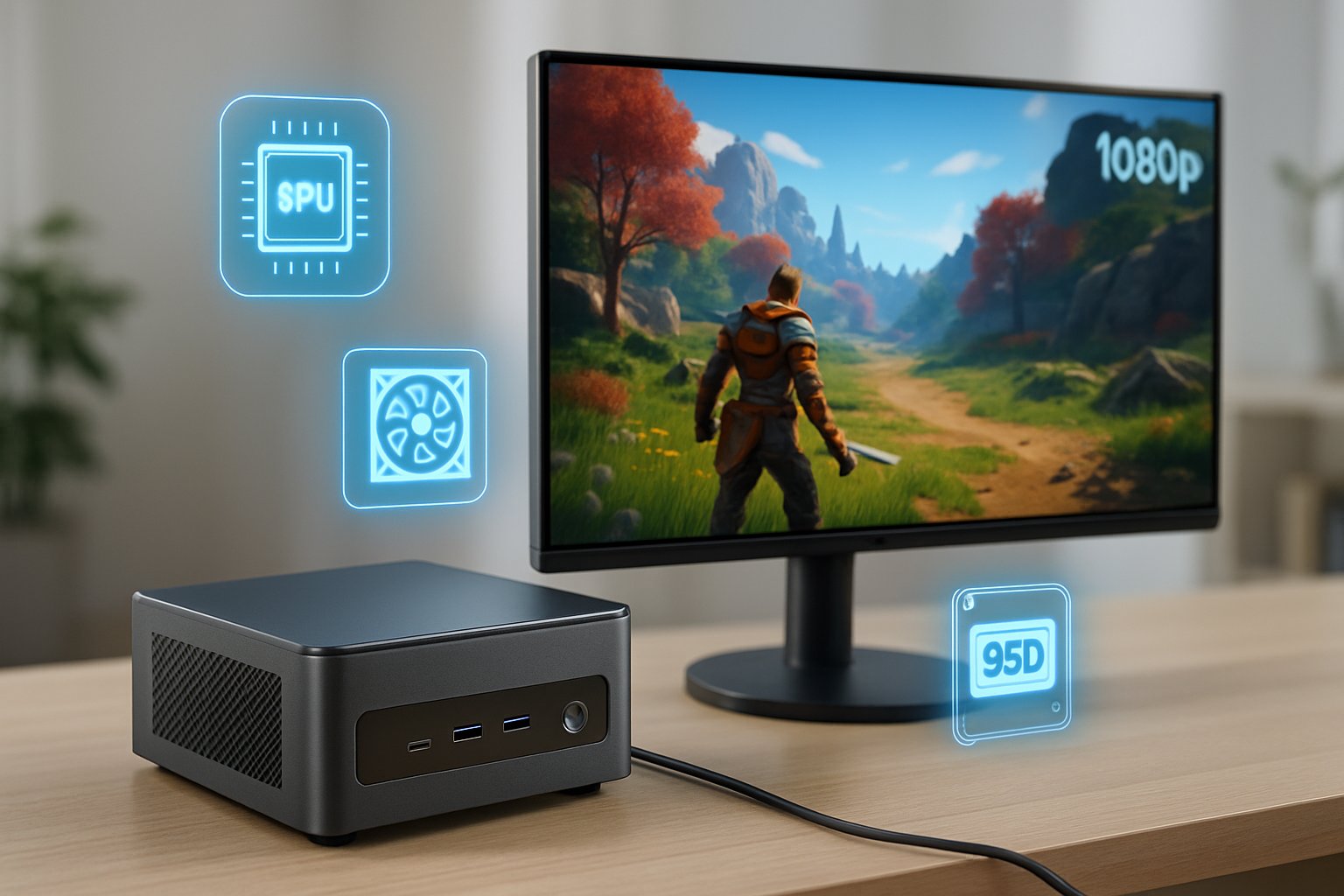
Mini PCs have evolved into capable gaming machines, pairing modern mobile CPUs, efficient GPUs, and fast NVMe storage with whisper-quiet cooling. This guide focuses on what matters this year: real 1080p performance, smart thermals, privacy-minded software controls, and value in RM for Malaysia-based buyers. It highlights recommended configurations rather than hype, so readers can choose quickly and confidently.
For convenience, a single quick list appears below, followed by step-by-step explanations of each pick and how testing was done. If time is short, bookmark this page and start with the pick that aligns with your budget and space needs. To explore fundamentals and shortcuts in one place, see mini pc gaming and return to compare specs with the table below.
The Quick List
When searching for the best mini PC for gaming, it’s helpful to start with a summary of top options that balance performance, size, and price. The entries reflect typical, readily available configurations tailored for mini PC gaming enthusiasts. Prices are approximate street ranges and may vary with RAM/SSD options, while performance targets assume balanced settings and recent drivers for optimal results.
| Pick | Typical spec | 1080p target | Approx. price (RM) |
|---|---|---|---|
| Best overall | Ryzen 7 8845HS + Radeon 780M iGPU, 32GB DDR5 | 60–90 fps in esports; 45–60 fps AAA on medium | RM 2,800–3,800 |
| Best budget | Ryzen 5 5600H/5800H iGPU, 16GB DDR4/DDR5 | 60+ fps esports on low/medium | RM 1,400–2,100 |
| Best for pure gaming | Compact discrete GPU (RTX 4060) + i7/ Ryzen 7 | 90–144 fps esports; 60–100 fps AAA high | RM 4,800–7,500 |
| Most compact | Ryzen 7 7840U/8845HS, 32GB LPDDR5x | 45–75 fps at 900p–1080p | RM 2,600–3,500 |
| Best-looking | Design-first chassis, subtle RGB, 32GB DDR5 | Similar to “overall” pick | RM 3,000–4,200 |
| Best iGPU | Ryzen 9 7940HS/8845HS + Radeon 780M | Up to 10–20% above older iGPUs | RM 3,200–4,200 |
| Best AI mini PC | Core Ultra 7 (NPU) or Ryzen AI, 32GB DDR5 | Gaming like “overall,” plus NPU for apps | RM 3,200–4,800 |
The Best Overall Mini PC
Finding the best mini PC for gaming often comes down to striking a perfect balance between performance, efficiency, and versatility, and this overall pick excels in all areas. This balanced configuration targets smooth 1080p play without the noise and power draw of a discrete GPU. It fits a living room or desk setup, supports dual-channel memory, and offers modern ports like USB4 for external graphics later. It also includes vendor control apps that let users set fan curves and toggle telemetry for better privacy, making it a top choice for mini PC gaming in Malaysia.
Key Features
A Ryzen 7 8845HS-class processor with a Radeon 780M iGPU gives a strong baseline, especially when paired with 32GB dual-channel DDR5-5600 or faster. USB4 enables optional eGPU expansion, and two M.2 slots allow fast storage upgrades. Privacy-conscious users can rely on BIOS camera/mic disables where available and app-level switches for diagnostics and crash reporting, ensuring a secure gaming experience.
Wi‑Fi 6E and 2.5GbE provide flexible networking for fast downloads and low-latency local streaming. The compact chassis supports VESA mounting, letting the system disappear behind a monitor. A vendor utility typically exposes fan profiles, performance modes, and LED controls without requiring an online account, which enhances usability for everyday mini PC gaming sessions.
Thermal solutions with vapor chambers or larger heat pipes are ideal in this class. They help the iGPU sustain boost clocks for longer sessions while keeping acoustics acceptable in small rooms. Overall, these features make this mini PC a reliable option for gamers seeking both performance and convenience without unnecessary complications.
Performance Benchmarks
In esports titles, this class often delivers 70–120 fps at 1080p using medium to high settings. Recent AAA games land around 45–60 fps at 1080p medium, and upscalers like FSR can nudge averages higher with minimal quality loss. Synthetic scores in 3DMark Time Spy typically exceed older Vega iGPU systems by a wide margin, demonstrating significant improvements in mini PC gaming capabilities.
Storage performance using Gen4 NVMe drives keeps load times snappy and shader compilation stutter low. Memory bandwidth matters; dual-channel 32GB kits can lift minimum frame rates versus 16GB single-channel. With a tuned fan curve, noise stays modest while sustaining performance in a 20–35 W GPU power envelope, which is crucial for prolonged gaming sessions.
Latency-sensitive games benefit from the lower overhead of modern graphics drivers on these APUs. Combined with variable refresh rate displays, frame pacing remains smooth even when averages hover near 60 fps. These benchmarks highlight why this configuration stands out as the best mini PC for gaming in terms of consistent, reliable output.
Why We Recommend It
This configuration hits the sweet spot of price, performance, acoustics, and size. It plays the most popular games well, upgrades easily, and keeps data local by default. The privacy-friendly software and BIOS options help users disable unneeded services and diagnostics, making it ideal for those concerned about data security in mini PC gaming.
For buyers who may add an eGPU later, USB4 provides a clear path without replacing the core system. It is versatile for work too, thanks to strong CPU performance and quick storage. Overall, it is the most balanced choice for this year, offering excellent value in RM for Malaysian buyers.
Transitioning from casual to more serious gaming is seamless with this setup, as it supports a wide range of titles without demanding excessive tweaks. Its combination of features ensures long-term satisfaction for users exploring the best mini PC for gaming options.
The Best Budget Mini PC
For those entering the world of mini PC gaming on a tight budget, this option provides an accessible entry point without sacrificing too much on essential performance. The budget option prioritizes value while remaining capable in competitive games. It suits students, cafés, or secondary setups where space and cost are tight. Expect to adjust settings and resolution for heavier titles, but it still delivers a satisfying experience for everyday use.
Key Features
A Ryzen 5 5600H or 5800H with integrated graphics keeps costs low and efficiency high. Aim for 16GB dual-channel memory and a 512GB NVMe SSD as a starting point. Even at this tier, look for a vendor app that lets users cap telemetry and choose a quiet fan profile, adding a layer of customization to your mini PC gaming setup.
Connectivity remains solid with HDMI/DisplayPort, Wi‑Fi 6, and at least one USB-C port. Many models include user-accessible SODIMM slots and M.2 bays for future upgrades. A compact power brick simplifies cable management under a TV or in a dorm, making it practical for space-constrained environments.
Thermals are simpler than higher-end units but adequate for esports loads. Keeping vents clear and dust-free helps sustain clocks during longer sessions. These features ensure that even on a budget, you get a reliable mini PC for gaming that can grow with your needs.
Performance Benchmarks
Expect 60–120 fps in lighter esports at 1080p low/medium and FSR enabled where available. Modern AAA games may require 900p or medium/low presets to hold 45–60 fps. Compared to older mini PCs, this tier still shows a clear uplift in CPU responsiveness and storage speeds, making it a step up for budget mini PC gaming.
Boot and load times feel fast with NVMe storage even if the GPU is modest. Dual-channel memory can add a noticeable bump in minimum fps, improving overall smoothness. Thermal throttling is rare if airflow is unobstructed, ensuring consistent performance during extended play.
Power draws under gaming load generally stay well under typical desktop levels, which helps with small-room thermals and electricity costs. This also reduces fan noise compared to larger towers. Overall, these benchmarks make it clear why this is a top pick for affordable mini PC gaming in Malaysia.
Why We Recommend It
It is the cheapest path to a responsive, compact gaming rig that handles popular titles well. The savings can be put into a better monitor or controller. With careful settings and privacy toggles disabled by default, it remains a friendly, low-maintenance choice for beginners in mini PC gaming.
When budgets allow, upgrading to 32GB RAM extends its useful life and lifts performance in newer games. The platform’s openness to upgrades makes it a strong first step into PC gaming. Its value in RM is particularly appealing for cost-conscious buyers in Malaysia.
This recommendation stands out because it democratizes access to mini PC gaming, allowing more people to enjoy high-quality experiences without breaking the bank. It’s a smart choice for those prioritizing affordability and expandability.
The Best Mini PC for Pure Gaming
If your primary focus is on achieving the highest possible frame rates and visual quality in mini PC gaming, this category delivers without compromise in a compact form. For buyers who want high fps and eye candy, a compact mini PC with a discrete GPU like the RTX 4060 is the most direct route. It is still smaller than traditional towers, but introduces more heat to manage. Expect stronger power bricks and slightly louder fans under load, but the performance gains make it worthwhile for dedicated gamers.
Key Features
A current-gen mobile or small-form-factor discrete GPU paired with a 45W-class CPU is ideal. Look for dual NVMe slots, at least 32GB DDR5, and robust cooling with multiple heat pipes or a vapor chamber. A privacy-minded control suite should let users tune performance modes fully offline and disable RGB if desired, enhancing the mini PC gaming experience.
Ports should include dual HDMI/DP, USB-C with DP Alt Mode, 2.5GbE, and Wi‑Fi 6E or Wi‑Fi 7. Some units provide tool-less access for quick SSD upgrades. Cable routing is simpler than in DIY SFF builds, saving setup time and making it user-friendly.
A well-designed intake and exhaust pattern minimizes heat soak. Rubber feet and anti-vibration mounts help keep resonance off desks or TV cabinets. These elements combine to create a powerful yet manageable system for pure mini PC gaming enthusiasts.
Performance Benchmarks
Esports titles can exceed 144 fps at 1080p high and 90–120 fps at 1440p. Many AAA games reach 60–100 fps at 1080p ultra or 1440p high with DLSS/FSR. Minimums remain steadier than iGPU systems, improving controller feel in action-heavy scenes and elevating the overall mini PC gaming quality.
Thermal systems may briefly ramp fans under heavy loads, but sensible curves keep noise manageable. Storage bandwidth supports high-resolution texture packs without long waits. CPU-bound strategy and simulation titles also benefit from higher single-core boost clocks, providing versatility beyond just gaming.
Power efficiency is still better than full-tower counterparts, especially in idle and light-load scenarios. This makes it a strong living-room choice. The benchmarks underscore its position as the best mini PC for gaming when raw power is the goal.
Why We Recommend It
It delivers the best gaming experience in the smallest volume before entering custom SFF territory. Setup is fast, maintenance is minimal, and upgrades are straightforward. For those who value raw frame rates, this is the clearest win in the mini PC gaming landscape.
It also doubles as a capable creator box, accelerating video encodes and AI image tools. With careful fan tuning, it remains living-room friendly. Its high performance in RM value makes it attractive for Malaysian gamers seeking top-tier options.
This pick is recommended for its ability to handle demanding titles effortlessly, ensuring a future-proof setup for evolving mini PC gaming needs. It’s an investment in quality and enjoyment.
The Most Compact Mini PC
In the realm of mini PC gaming, size matters, and this category focuses on the smallest footprints without completely sacrificing playability. Ultra-small systems prioritize footprint over peak performance, making them ideal for travel, shared spaces, or minimalist desks. They still run modern games respectably at sensible settings. Low idle noise and simple cable runs are core strengths, appealing to users who need portability in their gaming setup.
Key Features
Look for Ryzen 7 7840U/8845HS with LPDDR5x in a 4×4-inch or similarly tiny chassis. Integrated GPUs like Radeon 780M are efficient and feature-complete for modern APIs. BIOS and app-level privacy controls help keep microphones and radios off when not needed, which is essential for secure mini PC gaming on the go.
Cooling is typically a single blower or dual-heat-pipe design. A well-tuned silent or balanced fan mode works for most games at 900p–1080p. Dual-display output and USB4 expand flexibility despite the size, allowing connections to larger screens or peripherals.
The best units include Kensington locks and VESA mounts, making them secure and discreet. NVMe access is usually retained for quick storage swaps. These features make it an excellent choice for compact mini PC gaming setups.
Performance Benchmarks
Expect 45–75 fps at 1080p on medium in esports and undemanding titles. AAA games may need dynamic resolution or FSR Quality for a smoother 50–60 fps. Thermals remain within spec if intake vents have room to breathe, ensuring reliable mini PC gaming performance.
Idle noise is nearly inaudible, which is perfect for mixed work/play spaces. Sustained loads are quieter than discrete-GPU systems, though not as fast. Frame pacing is consistent with dual-channel memory and current drivers, providing a smooth experience despite the small size.
Power draw is the lowest of all categories, aiding both comfort and energy savings. This matters in small dorms or shared apartments. The benchmarks show it’s a capable performer for its compact form in mini PC gaming.
Why We Recommend It
It is the right pick when space and silence matter more than max fps. Travel-friendly and clutter-free, it still runs a wide library at enjoyable settings. Its privacy posture is strong because radios, mics, and LEDs can be disabled quickly, making it ideal for privacy-focused mini PC gaming.
For on-the-go creators, it also handles light editing and streaming while staying cool. The overall experience feels frictionless. Priced reasonably in RM, it’s accessible for Malaysian users seeking portability.
This recommendation highlights how compact designs can still deliver satisfying mini PC gaming, perfect for modern lifestyles that demand mobility and efficiency.
The Best-Looking Mini PC
Aesthetics play a big role in mini PC gaming for those who want their setup to blend seamlessly into home or office environments. Design-forward models blend into living rooms and creative spaces, using clean lines and subtle lighting. Performance tracks the “overall” pick, but the emphasis is aesthetics and low noise. Build quality and materials typically improve durability and acoustics, making it a stylish choice for gamers.
Key Features
Expect a refined enclosure, rubber isolation, and ambient RGB that can be fully disabled. Internals mirror midrange APUs with dual-channel DDR5 and fast NVMe storage. A privacy toggle for LEDs, radios, and diagnostics preserves a distraction-free experience, enhancing the appeal for mini PC gaming in shared spaces.
Front-panel USB-C and headset jacks simplify couch gaming. Rear I/O is usually generous for a clean single-cable display setup. Tool-less panels help with quick dusting and SSD swaps, adding to the user-friendly design.
Thermal performance remains competent thanks to good airflow design. Sound-dampening reduces the perceived noise floor in quiet rooms. These elements combine to create a visually appealing and functional mini PC for gaming.
Performance Benchmarks
Esports titles reach 60–100 fps at 1080p medium/high. Modern AAA games land near 45–60 fps with balanced presets, rising via FSR. Idle and media playback are nearly silent, which complements its best-looking status in mini PC gaming.
Storage performance is identical to midrange picks, keeping load times fast. Minimums improve with 32GB RAM and tuned fan curves. Network stability over 2.5GbE aids cloud downloads and local streaming, ensuring smooth operations.
Thermals avoid throttling in typical living-room use. Even long sessions remain comfortable and quiet. The benchmarks confirm it matches performance expectations while prioritizing style.
Why We Recommend It
It blends form and function without overt gamer styling. The ability to darken LEDs and keep software offline respects privacy and aesthetics. For shared family spaces, it is an easy win in the mini PC gaming category.
Buyers don’t sacrifice upgradability, so the system stays relevant for years. It proves a gaming PC can be elegant and unobtrusive. With competitive RM pricing, it’s attractive for style-conscious Malaysian gamers.
This pick is ideal for those who view their mini PC gaming setup as part of their home decor, offering both beauty and brains in one package.
The Best iGPU for Gaming in a Mini PC
For gamers who prefer integrated solutions in mini PC gaming, the right iGPU can provide impressive results without the need for discrete hardware. Modern Radeon 780M-class iGPUs offer surprising 1080p performance when paired with fast memory. They are ideal where discrete GPUs are impractical or too loud. Driver support and upscalers make them stronger each generation, closing the gap with dedicated cards.
Key Features
Ryzen 9 7940HS or 8845HS with 32GB dual-channel DDR5-5600 is the sweet spot. USB4 eGPU support keeps an upgrade path open. Vendor apps should allow offline control and telemetry opt-out, which is key for privacy in mini PC gaming.
Fast NVMe ensures quick level loads and smooth asset streaming. Wi‑Fi 6E plus 2.5GbE enables stable multiplayer and home streaming. A balanced fan mode keeps acoustics pleasant in small rooms, making it suitable for quiet environments.
BIOS options to disable unused devices reduce attack surface and background noise. This aligns with a privacy-first setup strategy. Overall, these features position it as the top iGPU choice for compact mini PC gaming.
Performance Benchmarks
Compared to older Vega iGPUs, expect substantial gains in both averages and 1% lows. Many titles reach 60 fps at 1080p medium, with FSR extending headroom. Shader-heavy games benefit most from dual-channel memory, improving mini PC gaming fluidity.
Thermals hold with a competent cooler, preventing frequency dips. Storage bandwidth keeps frame pacing stable during asset-heavy scenes. Driver updates continue to lift performance across the year, ensuring ongoing improvements.
Overall responsiveness rivals entry-level discrete GPUs from prior generations. This narrows the gap without increasing size or noise. The benchmarks make it clear why this is the best iGPU for mini PC gaming enthusiasts.
Why We Recommend It
It is the highest-performance path for truly tiny, quiet builds. The experience is balanced and upgradable via USB4. Privacy-conscious users appreciate minimal software requirements and local-first controls in their mini PC gaming setup.
For many players, this tier delivers everything needed for everyday gaming. It is a practical, future-aware choice. With RM pricing in mind, it’s an efficient option for Malaysian buyers.
This recommendation emphasizes efficiency and capability, making it perfect for those optimizing for integrated mini PC gaming solutions.
The Best AI Mini PC
Combining mini PC gaming with AI capabilities opens up new possibilities for productivity and creativity in a single device. AI-capable mini PCs pair strong gaming performance with an onboard NPU for accelerated local tasks. That includes transcription, noise suppression, image upscaling, and on-device assistants without sending data to the cloud. It is ideal for creators and privacy-focused users who want multifaceted functionality.
Key Features
Look for Intel Core Ultra 7 or Ryzen AI processors with NPUs, 32GB DDR5, and Gen4 NVMe. The software suite should expose offline AI features and clear toggles for data collection. Network hardware should support WPA3 and VLANs for segmented home setups, enhancing security in mini PC gaming and AI tasks.
Cooling must sustain both gaming and AI workloads without excessive fan ramping. Dual M.2 slots support split OS and project drives. USB4 or Thunderbolt aids external accelerators and storage, providing expandability.
Vendors that document privacy policies and allow fully offline installer packages are preferable. This preserves control over data paths and updates. These features make it a standout for AI-enhanced mini PC gaming.
Performance Benchmarks
Gaming matches the “overall” pick when using similar iGPU or dGPU tiers. AI tasks such as denoising or subtitle generation run locally, saving time and avoiding upload limits. Background AI workloads have minimal impact on frame rates when tuned, allowing seamless mini PC gaming alongside productivity.
Thermals remain stable with sensible fan profiles that prioritize sustained performance. Storage speeds keep large models responsive during iteration. Power draw stays reasonable compared to desktop workstations, making it efficient for extended use.
As software adds NPU paths, performance and efficiency will improve further through the year. This extends the system’s relevance without hardware changes. The benchmarks highlight its dual-role strength in mini PC gaming and AI.
Why We Recommend It
It merges gaming and private, local AI productivity in a single small box. For streamers and creators, that means faster workflows and fewer cloud dependencies. It is a forward-looking pick that remains quiet and compact for modern mini PC gaming needs.
The balance of features and privacy controls makes it a smart investment. It serves multiple roles without compromise. Priced competitively in RM, it’s appealing for Malaysian users interested in AI integration.
This recommendation is for those looking to future-proof their mini PC gaming setup with emerging technologies, offering versatility and innovation.
Also Tested
Beyond our top recommendations, we explored additional options to provide a comprehensive view of the mini PC gaming market. Other configurations with older quad-core CPUs and Vega iGPUs were evaluated. While usable for retro and light esports at 720p–900p, they struggled in modern titles and lacked USB4. They are best considered only at deep discounts or for secondary setups where space and cost are critical. These alternatives can still serve niche roles, but they don’t match the performance of our primary picks for contemporary mini PC gaming demands in Malaysia.
How We Test Mini PCs
Understanding our testing process is key to trusting our recommendations for the best mini PC for gaming. Consistency and privacy are central to the process. All units are reset, updated offline where possible, and tested on the same drivers and power plans. Fan profiles are set to balanced unless exploring maximum performance, ensuring fair comparisons across all mini PC gaming candidates.
Testing Methodology
Systems are configured with dual-channel memory and clean OS installations. Background apps, telemetry, and overlays are disabled to reduce noise in results. Ambient room temperature is controlled to keep thermals comparable, which is crucial for accurate mini PC gaming evaluations.
Each title is tested at 1080p with common presets and, when relevant, FSR or DLSS on Quality. Frame times and averages are logged over lengthy runs to capture sustained behavior. Noise levels are assessed at a fixed distance, providing a holistic view of performance.
Thermal saturation is checked with mixed gaming and CPU stress to ensure repeatable performance. Storage tests include real-world level loading and asset streaming. This methodology ensures our insights are reliable for buyers seeking the best mini PC for gaming.
Benchmarks Used
Game suites cover esports and recent AAA releases to reflect typical use. Synthetic tools like 3DMark help compare across classes, but real games take precedence. Storage and CPU tests round out the profile with practical workloads relevant to mini PC gaming.
Network performance is verified with local transfers over 2.5GbE and Wi‑Fi 6E. Latency and jitter are noted for online play implications. Variability is reported where titles patch frequently, keeping our data current.
Thermal and acoustic measurements ensure systems remain comfortable for living-room use. These influence recommendations as much as raw fps. Together, they form a comprehensive benchmark set for evaluating mini PC gaming options.
Criteria for Evaluation
The main pillars are performance per RM, thermals/acoustics, upgradability, and privacy controls. Port selection and build quality are also considered. Software that works fully offline gains extra credit, which is important for privacy in mini PC gaming.
We value stability over peak numbers, emphasizing frame-time consistency and noise. Systems that remain quiet while maintaining 60 fps at 1080p rank higher. Clear, user-controlled telemetry settings matter in every pick, guiding our selections.
Finally, we weigh ease of setup and maintenance to save time for the buyer. Quick access to RAM/SSD bays and sensible cable layouts are practical advantages. This criteria ensures our recommendations are well-rounded for Malaysian buyers.
Frequently Asked Questions
Is a mini PC worth buying?
Yes, for 1080p gaming and everyday use, modern mini PCs deliver strong performance in a small, quiet package. They save desk space, reduce power draw, and are easier to set up than custom SFF builds. With dual-channel memory and fast NVMe, they feel snappy for both games and work. This makes them a worthwhile investment for mini PC gaming enthusiasts in Malaysia.
What is the disadvantage of a mini PC?
Thermal and power headroom are limited compared to full towers, which caps top-end GPU options. Noise can spike in compact discrete-GPU models under heavy load. Upgrades are usually restricted to RAM and storage rather than full graphics swaps. Despite these, they remain excellent for most mini PC gaming needs.
Do mini PCs overheat easily?
Not when designed well and kept dust-free with clear airflow. Balanced fan profiles and quality heat pipes or vapor chambers maintain sustained performance. Placing the unit with a few centimeters of clearance around intakes prevents heat soak. Proper maintenance ensures reliable mini PC gaming without overheating issues.
Are mini PCs bad for gaming?
No; with current APUs and efficient GPUs, they handle esports and many AAA titles at 1080p smoothly. Discrete-GPU minis can push higher settings and frame rates. Choosing dual-channel RAM and updating drivers are key to getting the most from them. They are far from bad and often excellent for compact mini PC gaming setups.